
Indoor growers often focus on one number above everything else: yield.
But the most efficient growers focus on a different metric.
Yield per watt.
Yield per watt measures how effectively your lighting system converts electrical power into plant growth. In other words, it tells you how much harvest you produce for every watt of energy your grow light consumes.
If two growers harvest the same amount, but one uses half the electricity, that grower is operating more efficiently.
Maximizing yield per watt is not about pushing plants harder. It’s about using light more intelligently.
Yield per watt is a simple concept.
It compares total harvest weight to the amount of lighting power used during the grow cycle.
For example:
Power Used Harvest Yield Per Watt
400W light 400g harvest 1 gram per watt
400W light 600g harvest 1.5 grams per watt
The higher the ratio, the more efficiently your lighting system is performing.
This metric is widely used by experienced growers because it reflects both lighting performance and overall grow efficiency.
Many growers assume that increasing wattage automatically increases yield.
That’s not always true.
What matters more is how evenly light is distributed across the canopy.
If light intensity is concentrated in one area, some plants receive too much while others receive too little. This uneven distribution reduces the amount of usable canopy.
Even light distribution allows more plant surface to operate within the optimal photosynthetic range.
That means more of your canopy is contributing to yield.
Learn more about this concept in our guide to Uniform Canopy Coverage.
PPFD, or Photosynthetic Photon Flux Density, measures how many usable photons reach the plant canopy every second.
Higher PPFD generally supports faster plant growth, but only within a certain range.
Typical PPFD ranges:
Seedling: 100–300 µmol/m²/s
Vegetative: 300–600 µmol/m²/s
Flowering: 600–1000 µmol/m²/s
When PPFD is too low, plants lack the energy needed for strong growth. When it is too high, plants may experience light stress or bleaching.
Maximizing yield per watt means delivering the right amount of PPFD evenly across the canopy, not just achieving a high number directly beneath the fixture.
You can learn more about this in our PPFD Explained guide.
Light distribution begins with fixture design.
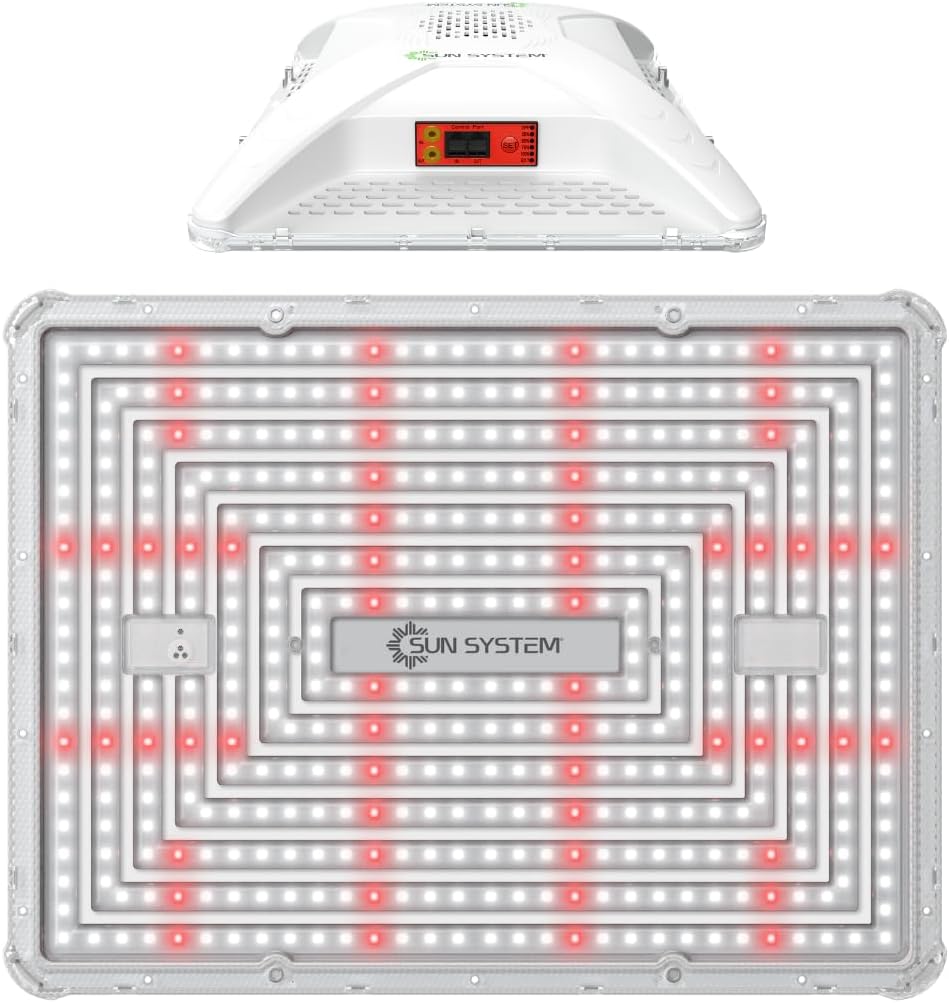
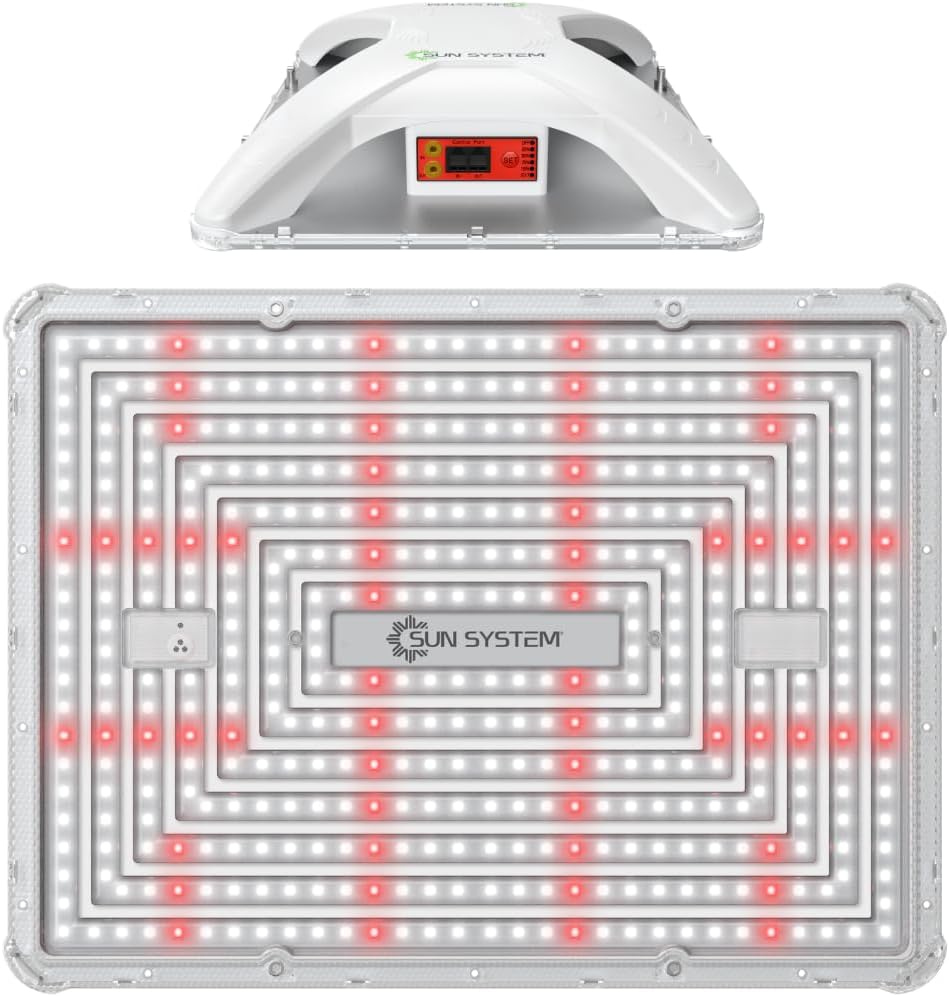
LED fixtures that concentrate wattage across fewer diodes tend to create intense hotspots in the center of the canopy while leaving edges underlit.
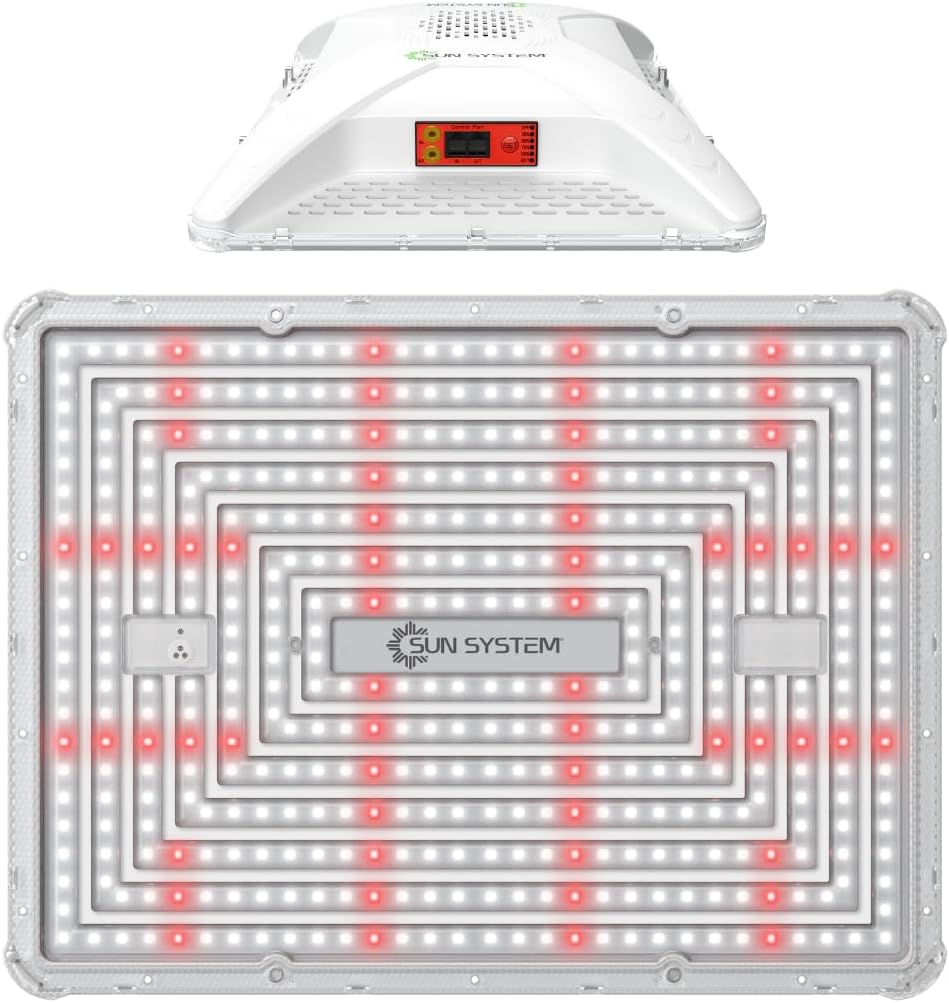
High-density diode arrays help spread light more evenly.
HelioGrow fixtures use a distributed diode architecture:
Another factor influencing yield per watt is how light is directed.
Raw LED boards emit light broadly. Without optical control, photons can concentrate beneath the fixture or spill outside the useful grow area.
HelioGrow integrates engineered optical lensing to guide light across the canopy.
This improves:
When photons reach productive plant surfaces instead of being wasted, the entire system becomes more efficient.
Maximizing yield per watt is not just about equipment. Setup and plant management play a major role.
Choose a light designed for your footprint. Underpowered lights reduce yield potential, while oversized fixtures create hotspots.
Fixture height directly influences PPFD distribution. Raising or lowering a light can significantly improve canopy uniformity.
See our Hanging Height Guide for recommended ranges.
Techniques like topping, low-stress training, and scrogging create a flatter canopy. A level canopy uses light more efficiently.
Use a PAR meter to measure intensity in multiple locations, not just the center.
Plants competing for light reduce efficiency across the canopy.
Spreading power across more emitters reduces localized intensity spikes and improves coverage across the grow footprint.
This allows more plants to receive usable light, improving overall canopy productivity.
Fixture Ideal Tent Size
HelioGrow 100W 2x2 grow tents
HelioGrow 200W 3x3 grow tents
HelioGrow 400W 4x4 grow tents
Matching fixture output to grow space helps maintain balanced PPFD distribution and efficient canopy coverage.
More usable canopy area means better harvest returns for the same electrical input.
Maximizing yield per watt is about efficiency.
It requires:
When light is distributed effectively, more of your plants operate within the productive photosynthetic range.
That’s when electrical power turns into plant growth.
And that’s when real efficiency begins.
Indoor growers often focus on one number above everything else: yield.
But the most efficient growers focus on a different metric.
Yield per watt.
Yield per watt measures how effectively your lighting system converts electrical power into plant growth. In other words, it tells you how much harvest you produce for every watt of energy your grow light consumes.
If two growers harvest the same amount, but one uses half the electricity, that grower is operating more efficiently.
Maximizing yield per watt is not about pushing plants harder. It’s about using light more intelligently.
Yield per watt is a simple concept.
It compares total harvest weight to the amount of lighting power used during the grow cycle.
For example:
Power Used Harvest Yield Per Watt
400W light 400g harvest 1 gram per watt
400W light 600g harvest 1.5 grams per watt
The higher the ratio, the more efficiently your lighting system is performing.
This metric is widely used by experienced growers because it reflects both lighting performance and overall grow efficiency.
Many growers assume that increasing wattage automatically increases yield.
That’s not always true.
What matters more is how evenly light is distributed across the canopy.
If light intensity is concentrated in one area, some plants receive too much while others receive too little. This uneven distribution reduces the amount of usable canopy.
Even light distribution allows more plant surface to operate within the optimal photosynthetic range.
That means more of your canopy is contributing to yield.
Learn more about this concept in our guide to Uniform Canopy Coverage.
PPFD, or Photosynthetic Photon Flux Density, measures how many usable photons reach the plant canopy every second.
Higher PPFD generally supports faster plant growth, but only within a certain range.
Typical PPFD ranges:
Seedling: 100–300 µmol/m²/s
Vegetative: 300–600 µmol/m²/s
Flowering: 600–1000 µmol/m²/s
When PPFD is too low, plants lack the energy needed for strong growth. When it is too high, plants may experience light stress or bleaching.
Maximizing yield per watt means delivering the right amount of PPFD evenly across the canopy, not just achieving a high number directly beneath the fixture.
You can learn more about this in our PPFD Explained guide.
Light distribution begins with fixture design.
LED fixtures that concentrate wattage across fewer diodes tend to create intense hotspots in the center of the canopy while leaving edges underlit.
High-density diode arrays help spread light more evenly.
HelioGrow fixtures use a distributed diode architecture:
Another factor influencing yield per watt is how light is directed.
Raw LED boards emit light broadly. Without optical control, photons can concentrate beneath the fixture or spill outside the useful grow area.
HelioGrow integrates engineered optical lensing to guide light across the canopy.
This improves:
When photons reach productive plant surfaces instead of being wasted, the entire system becomes more efficient.
Maximizing yield per watt is not just about equipment. Setup and plant management play a major role.
Choose a light designed for your footprint. Underpowered lights reduce yield potential, while oversized fixtures create hotspots.
Fixture height directly influences PPFD distribution. Raising or lowering a light can significantly improve canopy uniformity.
See our Hanging Height Guide for recommended ranges.
Techniques like topping, low-stress training, and scrogging create a flatter canopy. A level canopy uses light more efficiently.
Use a PAR meter to measure intensity in multiple locations, not just the center.
Plants competing for light reduce efficiency across the canopy.
Spreading power across more emitters reduces localized intensity spikes and improves coverage across the grow footprint.
This allows more plants to receive usable light, improving overall canopy productivity.
Fixture Ideal Tent Size
HelioGrow 100W 2x2 grow tents
HelioGrow 200W 3x3 grow tents
HelioGrow 400W 4x4 grow tents
Matching fixture output to grow space helps maintain balanced PPFD distribution and efficient canopy coverage.
More usable canopy area means better harvest returns for the same electrical input.
Maximizing yield per watt is about efficiency.
It requires:
When light is distributed effectively, more of your plants operate within the productive photosynthetic range.
That’s when electrical power turns into plant growth.
And that’s when real efficiency begins.