
If you grow indoors, you’ve probably seen the term PPFD.
It shows up on spec sheets. In grow forums. In product comparisons.
But what does it actually mean?
PPFD stands for Photosynthetic Photon Flux Density. In simple terms, it measures how much usable light reaches your plant canopy at any given moment.
PPFD isn't brightness or wattage, but a measurement of usable photons hitting your plants.
Understanding PPFD helps you make smarter decisions about light placement, intensity, and overall grow performance.
PPFD measures the number of photosynthetically active photons that hit one square meter every second.
It’s expressed in:
µmol/m²/s
(micromoles per square meter per second)
That sounds technical, but here’s what matters:
PPFD tells you how much light your plants can actually use for photosynthesis.
Higher PPFD means more available energy for growth. But more is not always better.
Too little light limits growth.
Too much light causes stress.
Outdoors, the sun distributes light naturally across a wide area.
Indoors, you control everything.
If PPFD is too low:
If PPFD is too high:
Knowing your PPFD helps you:
PPFD is not just a number. It’s a guide for optimizing plant performance.
Light requirements change throughout the growth cycle.
Here’s a general guideline for indoor cannabis and similar high-light crops:
100–300 µmol/m²/s
Gentle intensity to support early development.
300–600 µmol/m²/s
Encourages strong structure and leaf growth.
600–1000 µmol/m²/s
Supports bud development and density.
Levels above 1000 µmol/m²/s often require added CO₂ to remain productive.
The key is not just reaching these numbers in the center of the tent.
It’s achieving them evenly across the canopy.
Wattage tells you how much power a fixture draws from the wall.
PPFD tells you how much usable light reaches your plants.
Two fixtures can draw the same wattage and produce very different PPFD distribution patterns.
That’s why:
A fixture that produces strong PPFD only in the center wastes part of its potential.
Even distribution increases usable canopy area and improves yield per watt.
Many growers look only at peak PPFD numbers.
But the highest number on a chart doesn’t tell the full story.
What matters is how evenly that intensity is spread across your footprint.
If your center reads 900 µmol/m²/s but your edges read 350, part of your canopy is underperforming.
Uniform PPFD distribution:
Light distribution and canopy management work together.
To understand your lighting performance:
Adjust hanging height or dimming to smooth out extreme differences.
The goal is to bring the entire canopy into a productive range, not to chase the highest single reading.
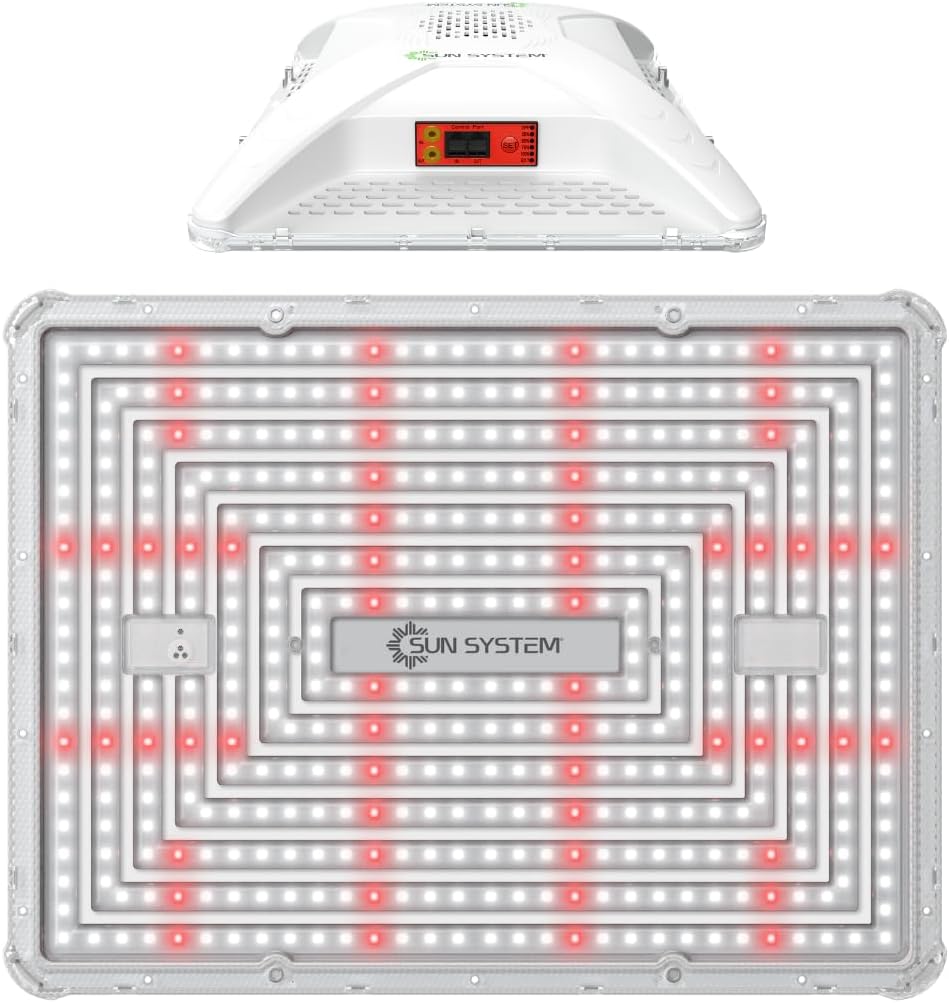
HelioGrow fixtures are designed with distribution in mind.
High diode density helps spread electrical load across more emitters:
This supports smoother light spread across the footprint.
Engineered optical lensing further guides photon distribution, helping reduce harsh focal zones and improve edge coverage.
Even PPFD distribution improves canopy response and supports stronger yield per watt.
PPFD is one of the most useful metrics in indoor growing.
It tells you how much usable light your plants receive. But the number alone isn’t enough.
You need:
When light is balanced across your grow space, more of your plants operate in the productive range.
That’s when real performance begins.
If you grow indoors, you’ve probably seen the term PPFD.
It shows up on spec sheets. In grow forums. In product comparisons.
But what does it actually mean?
PPFD stands for Photosynthetic Photon Flux Density. In simple terms, it measures how much usable light reaches your plant canopy at any given moment.
PPFD isn't brightness or wattage, but a measurement of usable photons hitting your plants.
Understanding PPFD helps you make smarter decisions about light placement, intensity, and overall grow performance.
PPFD measures the number of photosynthetically active photons that hit one square meter every second.
It’s expressed in:
µmol/m²/s
(micromoles per square meter per second)
That sounds technical, but here’s what matters:
PPFD tells you how much light your plants can actually use for photosynthesis.
Higher PPFD means more available energy for growth. But more is not always better.
Too little light limits growth.
Too much light causes stress.
Outdoors, the sun distributes light naturally across a wide area.
Indoors, you control everything.
If PPFD is too low:
If PPFD is too high:
Knowing your PPFD helps you:
PPFD is not just a number. It’s a guide for optimizing plant performance.
Light requirements change throughout the growth cycle.
Here’s a general guideline for indoor cannabis and similar high-light crops:
100–300 µmol/m²/s
Gentle intensity to support early development.
300–600 µmol/m²/s
Encourages strong structure and leaf growth.
600–1000 µmol/m²/s
Supports bud development and density.
Levels above 1000 µmol/m²/s often require added CO₂ to remain productive.
The key is not just reaching these numbers in the center of the tent.
It’s achieving them evenly across the canopy.
Wattage tells you how much power a fixture draws from the wall.
PPFD tells you how much usable light reaches your plants.
Two fixtures can draw the same wattage and produce very different PPFD distribution patterns.
That’s why:
A fixture that produces strong PPFD only in the center wastes part of its potential.
Even distribution increases usable canopy area and improves yield per watt.
Many growers look only at peak PPFD numbers.
But the highest number on a chart doesn’t tell the full story.
What matters is how evenly that intensity is spread across your footprint.
If your center reads 900 µmol/m²/s but your edges read 350, part of your canopy is underperforming.
Uniform PPFD distribution:
Light distribution and canopy management work together.
To understand your lighting performance:
Adjust hanging height or dimming to smooth out extreme differences.
The goal is to bring the entire canopy into a productive range, not to chase the highest single reading.
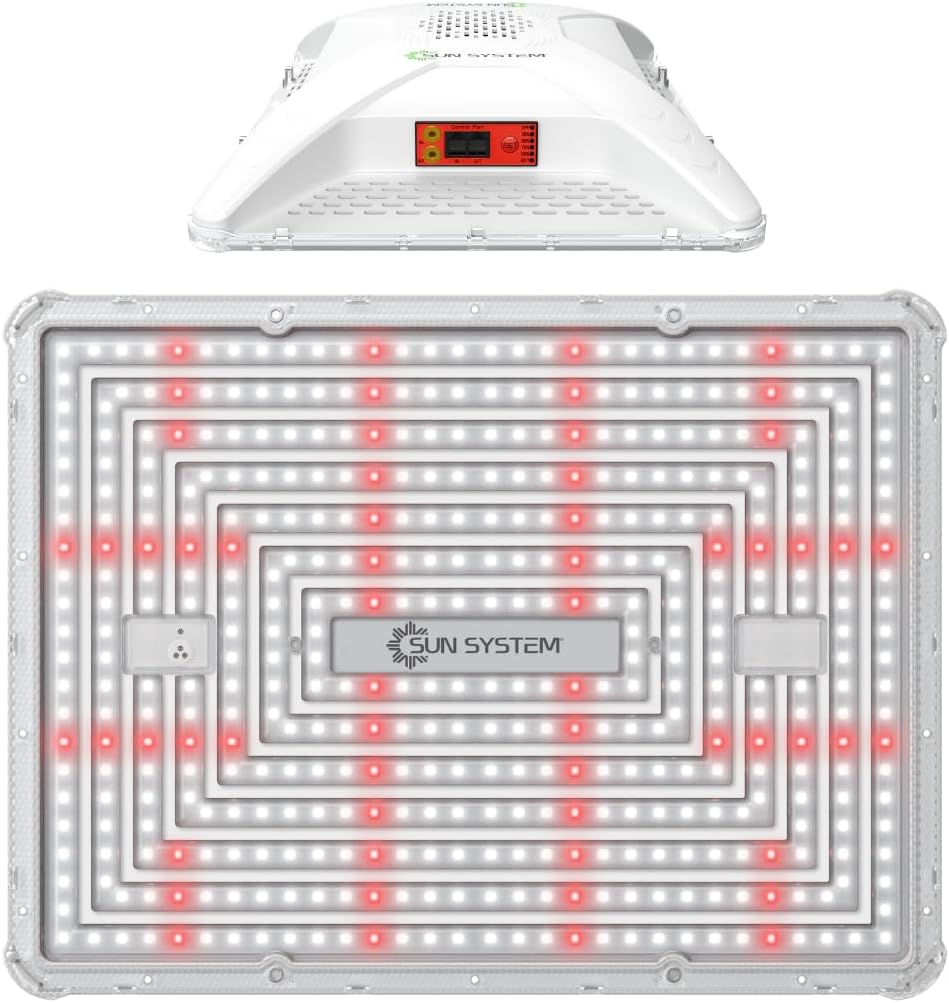
HelioGrow fixtures are designed with distribution in mind.
High diode density helps spread electrical load across more emitters:
This supports smoother light spread across the footprint.
Engineered optical lensing further guides photon distribution, helping reduce harsh focal zones and improve edge coverage.
Even PPFD distribution improves canopy response and supports stronger yield per watt.
PPFD is one of the most useful metrics in indoor growing.
It tells you how much usable light your plants receive. But the number alone isn’t enough.
You need:
When light is balanced across your grow space, more of your plants operate in the productive range.
That’s when real performance begins.